KIFC3 Motor Domain (Hm.sap) ,KIFC3电机域(液相色谱法)
Product uses
Measurement of microtubule-activated ATPase activity
Identification/characterization of proteins or small molecules that affect motor ATPase activity
Identification/characterization of proteins or small molecules that affect kinesin motility
Identification/characterization of proteins or small molecules that affect motor/microtubule interactions
Material
There are approximately 50 human kinesins that are currently divided into at least 14 classes. Kinesins are involved in almost all aspects of intracellular transport and their well documented role in cell division suggests that they may be excellent targets for anti-mitotic drug discovery. All kinesin proteins contain a conserved motor domain that contains a microtubule binding site and the ATP binding / hydrolysis site. The motor domain of various kinesins have been shown to have widely differing sensitivities to ATP analogs and inhibitory compounds such as monastrol, such results lead the way to the identification of therapeutically useful kinesin specific inhibitors. Cytoskeleton, Inc. has made available a selection of recombinant human kinesin motor domain proteins from 8 of the 14 reported kinesin classes. The proteins are extensively quality controlled for purity (>85%) and biological activity (microtubule activated ATPase activity must be at least comparable to published data). The protein domains are useful as targets for anti-mitotic drug discovery and as reagents for comparative studies of kinesin class specific motor activities.
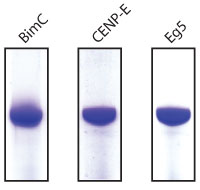
Purity
Protein purity is determined by scanning densitometry of Coomassie Blue stained protein on a 12% polyacrylamide gel. All kinesin motor domains are >85% pure. See figure 1 for example purities.